
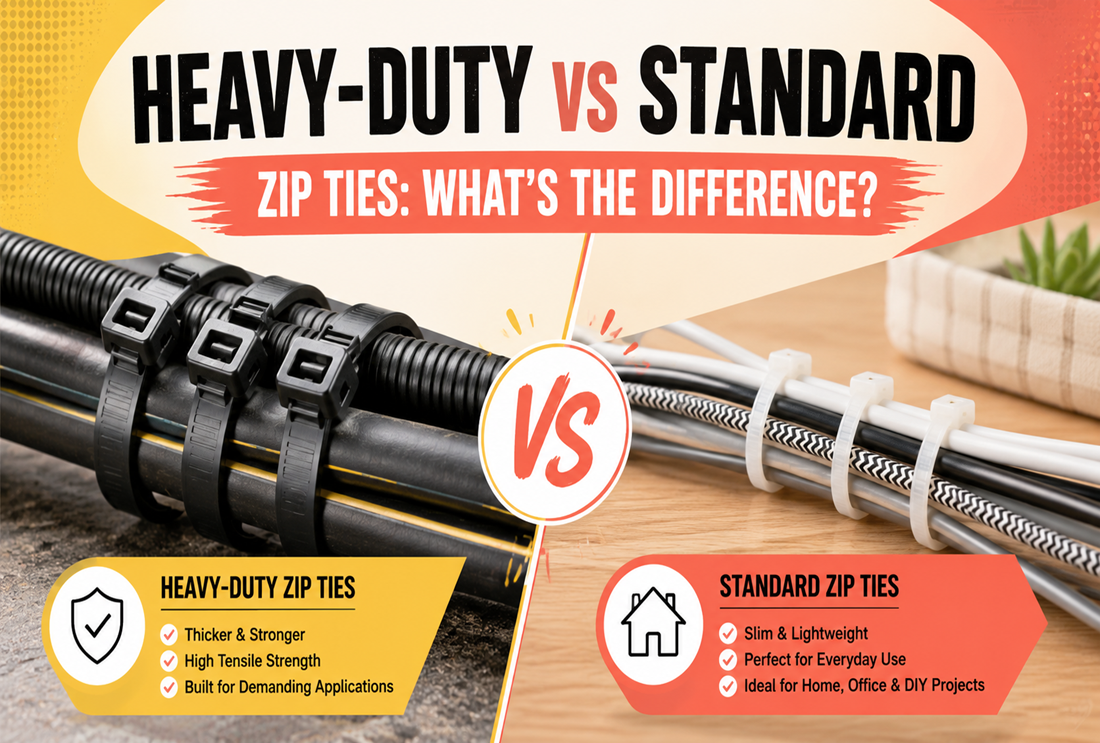
Scroll through any hardware store’s zip tie aisle and you’ll see the same basic shape repeated dozens of times — but pick up a “heavy-duty” pack next to a “standard” pack and the difference is immediately obvious in your hand. Heavy-duty ties are thicker, stiffer, and rated for tensile loads several times higher than their standard counterparts. Choosing the wrong one is one of the most common (and most avoidable) mistakes in cable management and outdoor fastening projects.
This guide explains exactly what separates heavy-duty from standard zip ties, when each one is the right call, and how to size your next purchase correctly based on tensile strength rather than guesswork. We’ll also look at extra-heavy-duty options for the most demanding jobs and the industries that depend on getting this choice right.
Table of Contents
- Heavy-Duty vs Standard Zip Ties: The Core Difference
- What Are Standard Zip Ties?
- What Are Heavy-Duty Zip Ties?
- Extra-Heavy-Duty Options
- Side-by-Side Comparison Table
- Advantages and Disadvantages
- Real-World Applications and Industries
- How to Choose the Right Option
- Common Mistakes to Avoid
- Installation Tips
- Maintenance and Storage Recommendations
- Safety Considerations
- Why Choose TIESELX?
- Recommended TIESELX Products
- Buying Guide
- Common Customer Mistakes
- Why Buy from ZipTiesEssentials.com
- Frequently Asked Questions
- Final Summary and Conclusion
Heavy-Duty vs Standard Zip Ties: The Core Difference
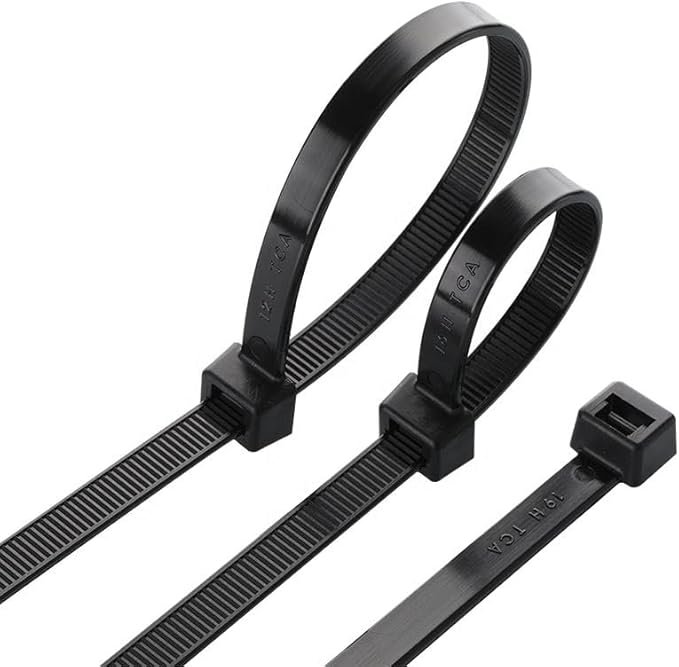
The difference between heavy-duty and standard zip ties comes down to strap thickness, width, and the resulting tensile strength. Standard ties are designed for light, everyday bundling tasks — think office cables or household cords — where a tensile rating of 18 to 40 lbs is more than sufficient. Heavy-duty ties use a thicker, wider strap construction that pushes tensile strength into the 50 to 250 lb range, making them suitable for structural fastening, automotive harnesses, and outdoor loads that standard ties simply cannot handle without snapping.
Manufacturers achieve this strength difference primarily through cross-sectional thickness rather than length. A longer standard tie is not automatically stronger than a shorter heavy-duty one — strap width and thickness are the real drivers of tensile rating, which is why checking the printed lb rating matters more than eyeballing the size.
What Are Standard Zip Ties?
Standard zip ties are the general-purpose nylon cable ties most people picture when they hear the term. They’re thin, lightweight, inexpensive, and widely available in bulk packs for everyday bundling of cables, wires, and light household items.
Key Features of Standard Zip Ties
- Typical tensile strength of 18–40 lbs
- Thinner strap width, usually around 0.14–0.18 inches
- Lower cost per unit, ideal for bulk indoor use
- Wide availability in multiple colors and sizes
What Are Heavy-Duty Zip Ties?
Heavy-duty zip ties are constructed with a thicker cross-section and reinforced locking head designed to hold significantly more weight and resist stress without deforming. Most are made from nylon 66 for improved strength and are frequently paired with UV stabilization for outdoor use, since heavy-duty applications often overlap with exterior projects. For a deep dive into sizing and strength selection, see our full heavy-duty zip ties guide.
Key Features of Heavy-Duty Zip Ties
- Tensile strength typically ranging from 50 lbs to 250 lbs
- Thicker, wider strap for improved structural integrity
- Often UV-stabilized for combined outdoor and heavy-load use
- Reinforced ratcheting head that resists slipping under tension
Extra-Heavy-Duty Options
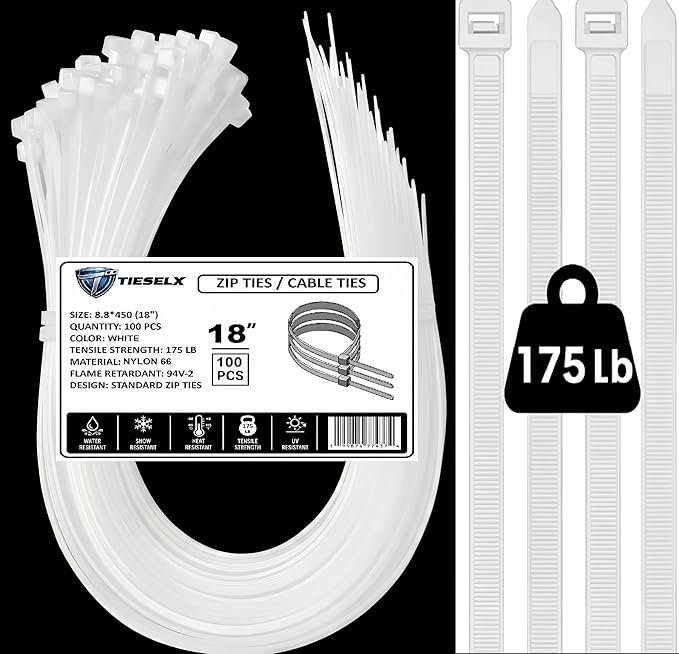
At the top end of the strength spectrum sit extra-heavy-duty ties, rated anywhere from 175 lbs up to 250 lbs or more. These are typically longer, wider, and thicker than standard heavy-duty ties, built for tasks like bundling large conduit runs, securing structural components during construction, or fastening heavy tarps and signage in high-wind conditions. They cost more per unit than standard heavy-duty ties, so they’re best reserved for genuinely demanding loads rather than used as a default “just in case” choice.
Side-by-Side Comparison Table
| Attribute | Standard Zip Ties | Heavy-Duty Zip Ties |
|---|---|---|
| Material | Nylon 6/6 | Reinforced nylon 66 |
| Tensile strength | 18–40 lbs | 50–250 lbs |
| Durability | Good for light everyday use | Excellent under heavy stress and vibration |
| UV resistance | Varies; often minimal | Frequently UV-stabilized (black) |
| Heat resistance | Standard indoor range | Often rated for wider temperature swings |
| Chemical resistance | Basic | Improved in most heavy-duty formulations |
| Indoor vs outdoor suitability | Best for indoor, light-duty use | Suitable for both, ideal for outdoor/industrial |
| Reusability | Releasable versions available | Releasable versions available |
| Cost | Lower per unit | Moderately higher per unit |
| Best applications | Office and home cable bundling | Automotive, construction, fencing, structural fastening |
| Recommended users | Homeowners, offices, hobbyists | Contractors, electricians, automotive techs |
Advantages and Disadvantages
| Advantages | Disadvantages | |
|---|---|---|
| Standard Zip Ties | Low cost, widely available, great for light bundling | Can snap under heavier loads or stress |
| Heavy-Duty Zip Ties | High tensile strength, resists vibration and stress, often UV-rated | Bulkier appearance, slightly higher cost |
Real-World Applications and Industries
Standard zip ties handle the everyday tasks: bundling office and home cables, organizing entertainment center wiring, and light garden tasks — see our zip ties for cable management guide for indoor sizing. Heavy-duty ties take over where the stakes are higher: securing automotive wiring harnesses, fastening fencing and structural components, bundling conduit on construction sites, and holding signage or equipment in place under wind load.
Industries That Rely on Heavy-Duty Zip Ties
- Construction and contracting — structural bundling and site wiring
- Automotive and marine-adjacent trades — engine bay and undercarriage harnesses
- Agriculture and landscaping — fencing and heavy irrigation lines
- Manufacturing — securing components under vibration
- Event production — rigging and temporary structural fastening
How to Choose the Right Option
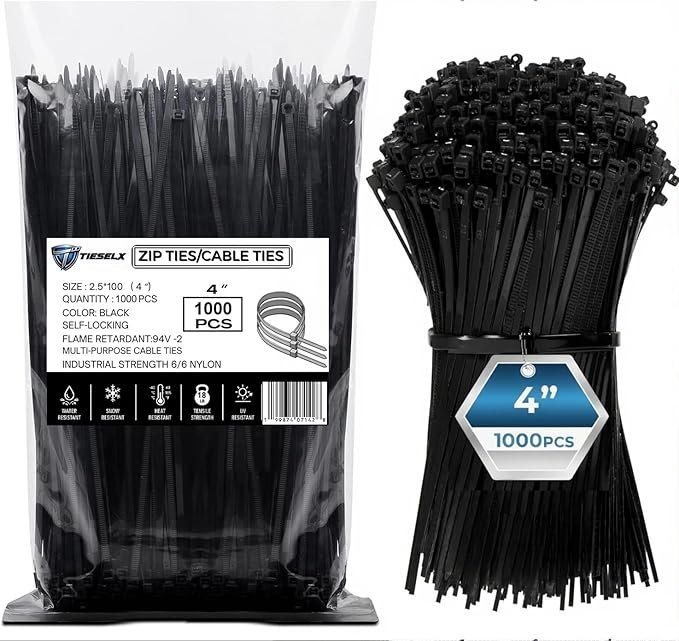
Estimate the actual load the tie will bear, including any stress from movement, vibration, or wind, and add a safety margin rather than cutting it close. Light indoor bundling rarely exceeds what a standard 18–40 lb tie can handle, but anything structural, automotive, or exposed to the elements should default to heavy-duty. When the project also involves extreme heat or corrosive exposure, stainless steel zip ties may outperform even heavy-duty nylon.
Common Mistakes to Avoid
- Underestimating bundle weight — a bundle of a dozen cables is heavier than it looks once gravity and vibration are factored in.
- Assuming “black” means “heavy-duty” — always check the tensile strength rating on the packaging.
- Overtightening standard ties to compensate for insufficient strength, which often causes premature failure.
- Ignoring width when comparing strength — length alone doesn’t indicate tensile capacity.
- Over-buying extra-heavy-duty ties for light tasks where a standard tie would work just as well for less money.
Installation Tips
Route the tie fully around the bundle before pulling it snug, ensuring even tension across the strap rather than pulling from one angle. For heavy-duty applications, avoid mounting directly against sharp edges — pairing with mounting zip ties distributes stress away from the locking head. Trim tails flush after installation to prevent snagging or injury.
Maintenance and Storage Recommendations
Inspect heavy-duty outdoor ties at least once a year for stiffening or surface wear, particularly in high-vibration automotive or industrial settings. Store spare ties away from direct sunlight and extreme temperatures to preserve their strength and flexibility until use.
Safety Considerations
Even heavy-duty zip ties are not a substitute for certified structural fasteners, load-rated hardware, or safety restraints. Always match tensile strength to the actual load with a reasonable safety margin, and replace any tie showing cracking or stiffness before it fails.
Why Choose TIESELX?
TIESELX heavy-duty zip ties are manufactured and tested to the tensile strength printed on the packaging, not an inflated marketing figure. Our range spans from light 18 lb standard ties for everyday bundling up to 250 lb extra-heavy-duty options for demanding structural and outdoor work, all from consistent, quality-controlled nylon 66.
Recommended TIESELX Products
- TIESELX 8 Inch Heavy-Duty Black Zip Ties (1000 Pack) — 40 lb tensile strength for demanding tasks
- TIESELX 12 Inch Heavy-Duty Black Zip Ties (1000 Pack) — longer reach for bigger bundles
- TIESELX 18 Inch Heavy-Duty Black Zip Ties (175 lb) — the longest, highest-strength option for large or multiple bundles
- Browse all Heavy-Duty Zip Ties — full range of high tensile strength options
- Stainless Steel Zip Ties — for the most extreme strength and environmental demands
Buying Guide
Match tensile strength to your heaviest anticipated load, not your average one, and always round up rather than down when in doubt. Consider a mixed inventory of both standard and heavy-duty zip ties so you’re never caught without the right strength on hand. For outdoor heavy-duty use, confirm UV stabilization alongside tensile rating.
Common Customer Mistakes
The most frequent mistake is buying standard-strength ties for automotive or structural projects simply because they were cheaper, resulting in snapped ties and repeat purchases. The second most common issue is buying heavy-duty or extra-heavy-duty ties for light indoor tasks where a standard tie would have worked fine and saved money — matching strength to the actual job avoids both problems.
Why Buy from ZipTiesEssentials.com
ZipTiesEssentials.com lists exact tensile strength ratings on every product so you can match the tie to the job with confidence, backed by secure checkout, transparent policies, and our expanding library of buying guides.
Frequently Asked Questions
What tensile strength counts as heavy-duty?
Generally, zip ties rated 50 lbs or higher are considered heavy-duty, with extra-heavy-duty options reaching up to 250 lbs.
Can I use standard zip ties for automotive wiring?
Light automotive wiring away from heat and vibration may be fine with standard ties, but engine bay and structural harnesses should use heavy-duty, UV-resistant ties.
Are heavy-duty zip ties reusable?
Standard heavy-duty ties are single-use, but releasable heavy-duty versions are available for projects needing adjustment.
Do heavy-duty zip ties cost much more than standard ones?
The cost difference is usually modest per unit, and the added strength typically prevents costly failures and re-dos.
What’s the difference in width between standard and heavy-duty ties?
Standard ties are usually 0.14–0.18 inches wide, while heavy-duty ties are often 0.3 inches or wider, contributing directly to their higher tensile rating.
Can heavy-duty zip ties be used indoors?
Yes, heavy-duty ties work fine indoors; they’re simply a stronger option than most indoor tasks require, so standard ties are usually more economical for light indoor use.
Are all heavy-duty zip ties UV-resistant?
Not automatically — always check the product description for explicit UV stabilization, especially for outdoor heavy-duty applications. See our UV-resistant zip ties guide for details.
What size heavy-duty zip tie do I need for fencing?
Measure the bundle or post diameter and add a few extra inches for looping; most fencing tasks call for 50 lb or higher rated ties in the 12–18 inch range.
Do heavy-duty zip ties handle vibration well?
Yes, their reinforced locking head and thicker strap make them well-suited to vibration-heavy automotive and industrial environments compared to standard ties.
Is stainless steel stronger than heavy-duty nylon zip ties?
Yes, stainless steel ties generally exceed nylon in raw tensile strength and are immune to UV and heat degradation; see our stainless steel vs nylon comparison for details.
Can standard zip ties be upgraded to heavy-duty by doubling up?
Using two standard ties together is not a reliable substitute for a single properly rated heavy-duty tie, since load distribution between two ties is inconsistent.
How do I know if a zip tie has failed and needs replacing?
Look for visible cracking, stiffness, discoloration, or a loose/slipping locking head — replace any tie showing these signs before it bears further load.
When should I choose extra-heavy-duty over standard heavy-duty ties?
Reserve extra-heavy-duty ties (175 lbs and up) for genuinely demanding structural, industrial, or high-wind applications rather than using them as an all-purpose default, since standard heavy-duty ties handle most tasks efficiently at a lower cost.
Final Summary and Conclusion
Standard zip ties remain the practical, budget-friendly choice for everyday indoor bundling, while heavy-duty and extra-heavy-duty zip ties earn their higher price with tensile strength and durability built for automotive, construction, and outdoor demands. Matching the tie’s rated strength to your actual project load is the single biggest factor in avoiding failures — and for projects that push even heavy-duty nylon to its limits, our stainless steel zip ties guide and UV-resistant zip ties guide can help you round out the right toolkit.
If a size or strength doesn’t end up matching your project once it arrives, our returns and refunds policy explains how to send it back.