
Releasable vs Standard Zip Ties: Which Is Best for Your Project?
Cut once, done forever — that’s how most people think of zip ties, and for good reason: the vast majority are designed as permanent, single-use fasteners. But an entire category of zip ties breaks that rule entirely. Releasable zip ties include a small tab or lever built into the locking head that lets you unlock and reuse the same tie dozens of times, making them a smarter choice for any project that isn’t truly permanent.
This guide compares releasable and standard zip ties in detail — construction, strength, cost, and the situations where each one saves you time, money, and frustration — so you can decide which belongs in your toolbox.
Table of Contents
- Releasable vs Standard Zip Ties: The Core Difference
- What Are Standard Zip Ties?
- What Are Releasable Zip Ties?
- How the Release Mechanism Works
- Side-by-Side Comparison Table
- Advantages and Disadvantages
- Real-World Applications and Industries
- How to Choose the Right Option
- Common Mistakes to Avoid
- Installation and Usage Tips
- Maintenance and Storage Recommendations
- Safety Considerations
- Why Choose TIESELX?
- Recommended TIESELX Products
- Buying Guide
- Common Customer Mistakes
- Why Buy from ZipTiesEssentials.com
- Frequently Asked Questions
- Final Summary and Conclusion
Releasable vs Standard Zip Ties: The Core Difference
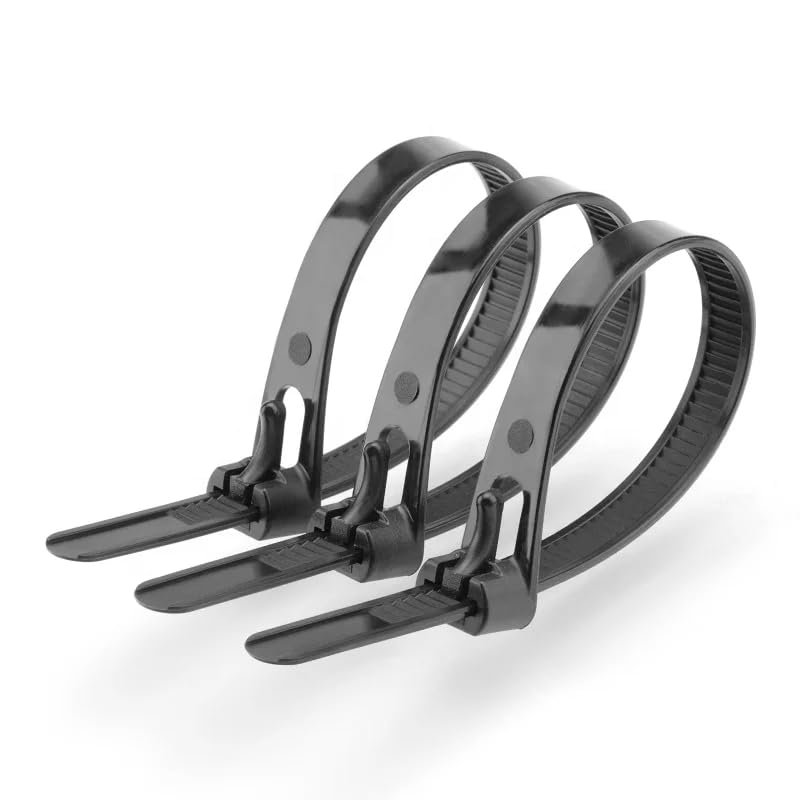
Standard zip ties use a one-way ratchet mechanism: once the strap passes through the locking head and the teeth engage, the only way to remove it is to cut it off. Releasable zip ties add a small pull-tab, push-button, or lever to that same locking head, allowing the teeth to disengage on demand so the tie can be loosened, removed, and reused. The trade-off is a slightly higher price and marginally lower maximum tensile strength compared to an equivalent standard tie, though quality releasable ties like TIESELX’s GripLock line still hold up to demanding everyday use.
What Are Standard Zip Ties?
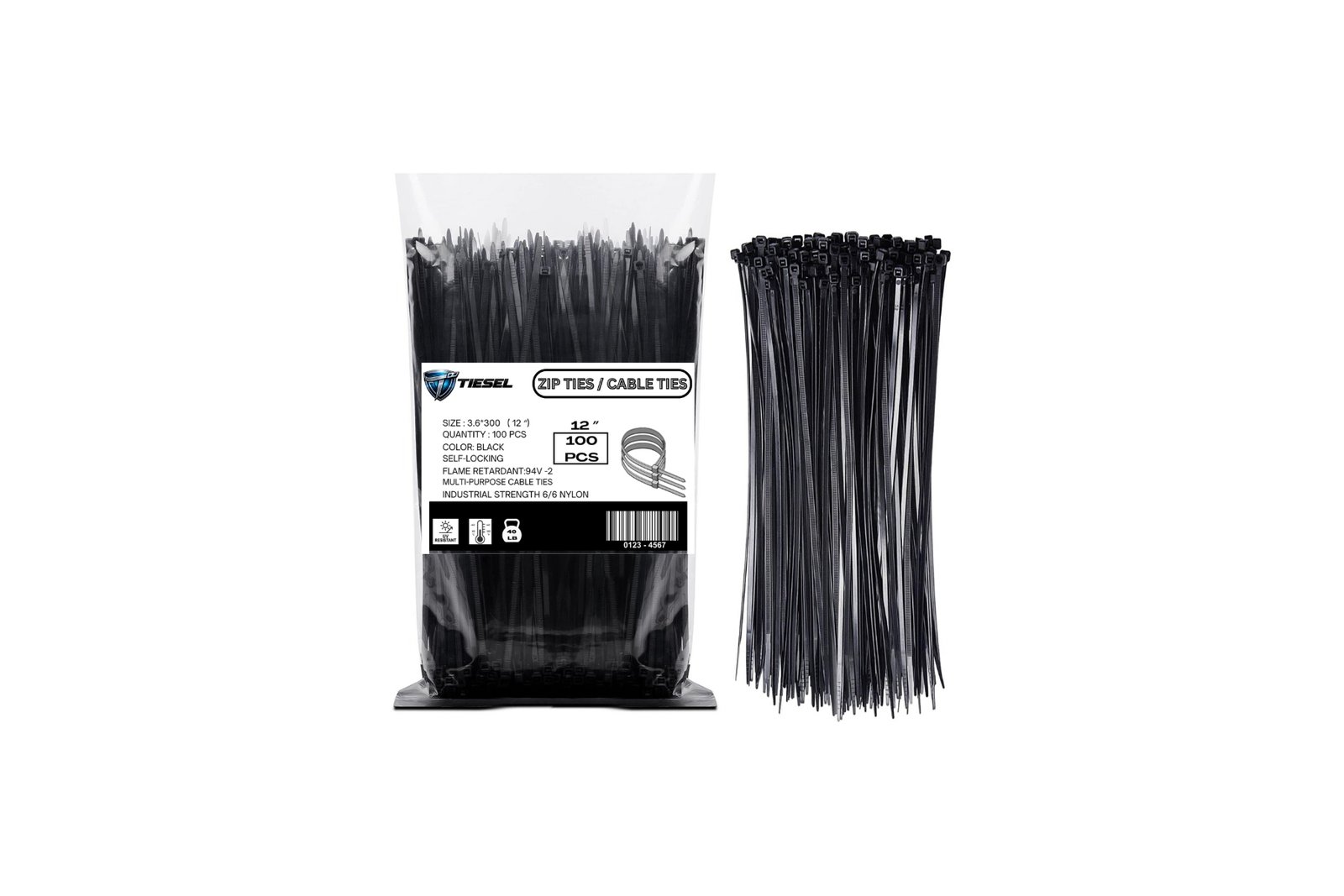
Standard zip ties are permanent, one-time-use nylon fasteners built around a simple ratchet-and-pawl locking head. Once tightened, they cannot be loosened without cutting the strap, which makes them ideal for installations that are truly final.
Key Features of Standard Zip Ties
- Permanent, single-use locking mechanism
- Slightly higher maximum tensile strength for the same strap width
- Lower cost per unit
- Simple, foolproof one-handed installation
What Are Releasable Zip Ties?
Releasable zip ties — sometimes marketed as reusable or adjustable cable ties — allow the locking mechanism to be manually disengaged, so the same tie can be loosened, repositioned, or removed entirely without cutting. For a complete breakdown of sizing and use cases, see our dedicated reusable zip ties guide.
Key Features of Releasable Zip Ties
- Push-tab or lever release mechanism for on-demand loosening
- Reusable dozens of times if not overstressed
- Ideal for projects requiring periodic adjustment
- Slightly lower tensile strength than an equivalent standard tie
How the Release Mechanism Works
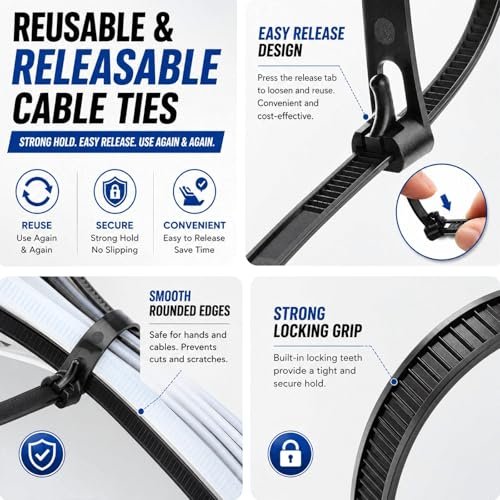
Most releasable ties use a small tab molded into the locking head that, when pressed or pulled, lifts the internal pawl away from the strap’s teeth, freeing it to slide back through. TIESELX’s GripLock mechanism is designed so this release action requires deliberate pressure, preventing the tie from loosening accidentally under normal vibration or handling while still allowing quick intentional release when needed.
Side-by-Side Comparison Table
| Attribute | Standard Zip Ties | Releasable Zip Ties |
|---|---|---|
| Material | Nylon 6/6 or 66 | Nylon 6/6 or 66 with release-tab head |
| Tensile strength | 18–175 lbs depending on size | Typically 18–75 lbs depending on size |
| Durability | Strong but single-use | Durable across repeated open/close cycles |
| UV resistance | Available in UV-stabilized versions | Available in UV-stabilized versions |
| Heat resistance | Standard nylon range | Standard nylon range |
| Chemical resistance | Basic nylon resistance | Basic nylon resistance |
| Indoor vs outdoor suitability | Both, depending on formulation | Both, depending on formulation |
| Reusability | None; single use only | Reusable dozens of times |
| Cost | Lower per unit | Higher per unit, but reusable |
| Best applications | Permanent bundling and fastening | Temporary setups, testing, frequent adjustments |
| Recommended users | Electricians, permanent installers | IT techs, hobbyists, event crews, gardeners |
Advantages and Disadvantages
| Advantages | Disadvantages | |
|---|---|---|
| Standard Zip Ties | Lower cost, slightly higher tensile strength, simple to install | Must be cut and discarded to remove |
| Releasable Zip Ties | Reusable, adjustable, reduces waste over time | Higher upfront cost, marginally lower strength |
Cost Over Time: Do Releasable Ties Pay for Themselves?
On a per-unit basis, a releasable tie can cost two to three times as much as a standard tie of the same size. That sounds like a poor deal until you consider the replacement cycle: a standard tie used in a setup that gets reconfigured five or six times over its life must be cut and replaced each time, meaning you actually buy five or six standard ties to do the job of one releasable tie. For any application with even moderate reconfiguration frequency — IT racks, seasonal garden supports, or event rigging used across multiple shows — releasable ties typically come out ahead on total cost within the first two or three reuses.
Real-World Applications and Industries
Standard zip ties dominate permanent installations: finished electrical wiring, automotive harnesses, and structural bundling where the tie should never need removal. Releasable ties shine wherever change is part of the plan — IT technicians frequently reconfiguring server racks, gardeners seasonally adjusting trellises and plant supports, event crews rigging and striking temporary setups, and hobbyists testing cable routing before committing to a permanent tie.
Industries That Rely on Releasable Zip Ties
- IT and networking — frequently reconfigured server and rack cabling
- Event production — temporary rigging that needs to come down cleanly
- Gardening and landscaping — seasonal plant training and trellis adjustments
- Automotive hobbyists — testing wiring routes before final installation
- Workshops and hobbyists — temporary jigs, fixtures, and prototypes
How to Choose the Right Option
Ask whether the installation is genuinely final or likely to need adjustment, expansion, or removal later. If there’s any reasonable chance you’ll need to reopen the bundle — for troubleshooting, seasonal changes, or reconfiguration — a releasable tie pays for itself quickly by eliminating the need to cut and replace. For truly permanent structural or electrical work, standard ties offer marginally better strength at a lower price. If your project also involves outdoor exposure, check out our UV-resistant zip ties guide to combine reusability with weather durability.
Common Mistakes to Avoid
- Using standard ties for testing or prototyping — cutting and replacing ties repeatedly wastes both time and material.
- Over-tightening releasable ties beyond their rated strength, which can damage the release tab over time.
- Assuming releasable ties match standard ties in raw strength — always check the tensile rating for heavier loads.
- Forgetting the release mechanism location — leaving it inaccessible after installation defeats the purpose of choosing a releasable tie.
Installation and Usage Tips
When installing a releasable tie, leave the release tab facing an accessible direction so future adjustments don’t require cutting anyway. Press the tab firmly and evenly when releasing to avoid unnecessary strain on the mechanism, and avoid overtightening initially if you expect to reposition the tie later. For permanent standard ties, trim tails flush after installation and consider pairing with mounting zip ties for wall or panel attachment.
Maintenance and Storage Recommendations
Inspect the release tab periodically on frequently reused ties for signs of wear or cracking, and retire any tie that no longer locks securely. Store both types away from direct sunlight and extreme heat, particularly non-UV-stabilized releasable ties used indoors that may migrate outdoors for temporary tasks.
Safety Considerations
Never reuse a releasable tie that shows visible cracking, a loose release tab, or reduced holding tension — replace it rather than risk failure. As with all zip ties, neither type should be used as a substitute for certified structural fasteners or load-rated safety hardware.
Why Choose TIESELX?
TIESELX’s GripLock releasable zip ties are engineered so the release mechanism stays reliable through dozens of open-close cycles, not just a handful, while still holding tension securely during normal use. Paired with our standard nylon 66 ties for permanent applications, TIESELX gives you both options from a single trusted source.
Recommended TIESELX Products
- TIESELX Reusable Zip Ties (100 Pack, Assorted Sizes) — GripLock releasable design, 75 lb tensile strength
- Browse all Reusable/Releasable Zip Ties — full range of adjustable cable ties
- TIESELX 8 Inch Heavy-Duty Black Zip Ties — for permanent, high-strength installations
- Black Zip Ties — standard UV-resistant options for outdoor permanent use
Buying Guide
For projects with any uncertainty about final configuration, buy releasable ties even at a slightly higher cost — the ability to reopen and readjust typically saves money over repeated standard-tie replacements. For strictly permanent, high-strength applications, standard or heavy-duty zip ties remain the more economical choice.
Common Customer Mistakes
The most common mistake is buying standard ties for projects that end up needing frequent adjustment, leading to a pile of cut-off ties and repeat purchases. The opposite mistake — buying releasable ties for permanent structural work where maximum tensile strength matters most — also happens, though less frequently. Matching the tie type to the project’s actual lifecycle avoids both.
Why Buy from ZipTiesEssentials.com
ZipTiesEssentials.com stocks genuine TIESELX GripLock releasable ties alongside our full standard and heavy-duty lines, with tensile strength and reusability clearly listed on every product page, secure checkout, and our growing library of guides to help you choose right the first time.
Frequently Asked Questions
How many times can a releasable zip tie be reused?
Quality releasable ties like TIESELX GripLock can typically be reopened and reused dozens of times before the mechanism shows wear, depending on how carefully they’re handled.
Are releasable zip ties as strong as standard ones?
Releasable ties are generally slightly lower in tensile strength than an equivalent standard tie of the same size, though many releasable options still handle 40–75 lbs comfortably.
Do releasable zip ties cost more than standard ones?
Yes, typically more per unit, but the ability to reuse them repeatedly often makes them more economical over the life of a project.
Can releasable zip ties be used outdoors?
Yes, as long as you choose a UV-stabilized releasable tie; check our UV-resistant zip ties guide for outdoor-specific considerations.
What’s the best use case for releasable zip ties?
Any project involving frequent adjustment, testing, or temporary setup — such as IT cabling, event rigging, or seasonal gardening — benefits most from releasable ties.
Do standard zip ties hold tighter than releasable ones?
Standard ties can generally be tightened marginally more due to their simpler, more rigid locking mechanism, though the practical difference is small for most everyday tasks.
Can I use releasable zip ties for heavy-duty applications?
Some releasable ties are rated for heavier loads, but for maximum strength in structural or automotive applications, standard or heavy-duty zip ties are usually the better choice.
How do I release a GripLock zip tie?
Press or pull the small release tab built into the locking head; this lifts the internal pawl and allows the strap to slide free without cutting.
Are releasable zip ties reusable in cold weather?
Nylon becomes slightly less flexible in cold temperatures, so releasable ties should be handled gently in freezing conditions to avoid stressing the release tab.
What sizes do releasable zip ties come in?
Releasable ties are commonly available in assorted packs covering 6, 8, 10, and 12 inch lengths, similar to standard tie size ranges.
Can releasable zip ties replace cable clips or cable sleeves?
They can complement rather than fully replace them — pairing releasable ties with cable clips or cable sleeves often creates a cleaner, more adjustable cable management system.
Is it worth buying both standard and releasable zip ties?
Yes, most households and professionals benefit from keeping both types on hand: standard for final installations and releasable for anything likely to change.
Do releasable zip ties really save money over time?
For projects requiring repeated adjustment, yes — a single releasable tie often replaces several standard ties that would otherwise need to be cut and discarded with each change.
Final Summary and Conclusion
Standard zip ties remain the simplest, most economical choice for permanent installations, while releasable zip ties earn their higher price by eliminating waste and hassle on projects that need ongoing adjustment. Choosing between them comes down to one question: will you ever need to open this bundle again? If there’s any doubt, a releasable tie is usually the smarter investment — and pairing this guide with our reusable zip ties guide or heavy-duty zip ties guide will help you build out the right mix for your next project.