
Stainless Steel vs Nylon Zip Ties: A Complete Comparison Guide
Nylon zip ties handle the vast majority of everyday cable and bundling tasks perfectly well, but there’s a point where heat, corrosion, or raw mechanical stress simply exceeds what any plastic fastener can survive. That’s where stainless steel zip ties take over. Built from actual metal rather than polymer, they shrug off conditions that would melt, crack, or dissolve a nylon tie within days.
This guide compares stainless steel and nylon zip ties across every metric that matters — strength, heat resistance, cost, and real-world application — so you can decide with confidence which material belongs in your next project.
Table of Contents
- Stainless Steel vs Nylon Zip Ties: The Core Difference
- What Are Nylon Zip Ties?
- What Are Stainless Steel Zip Ties?
- 304 vs 316 Stainless Steel: What’s the Difference?
- Side-by-Side Comparison Table
- Advantages and Disadvantages
- Real-World Applications and Industries
- How to Choose the Right Option
- Common Mistakes to Avoid
- Installation Tips
- Maintenance and Storage Recommendations
- Safety Considerations
- Why Choose TIESELX?
- Recommended TIESELX Products
- Buying Guide
- Common Customer Mistakes
- Why Buy from ZipTiesEssentials.com
- Frequently Asked Questions
- Final Summary and Conclusion
Stainless Steel vs Nylon Zip Ties: The Core Difference
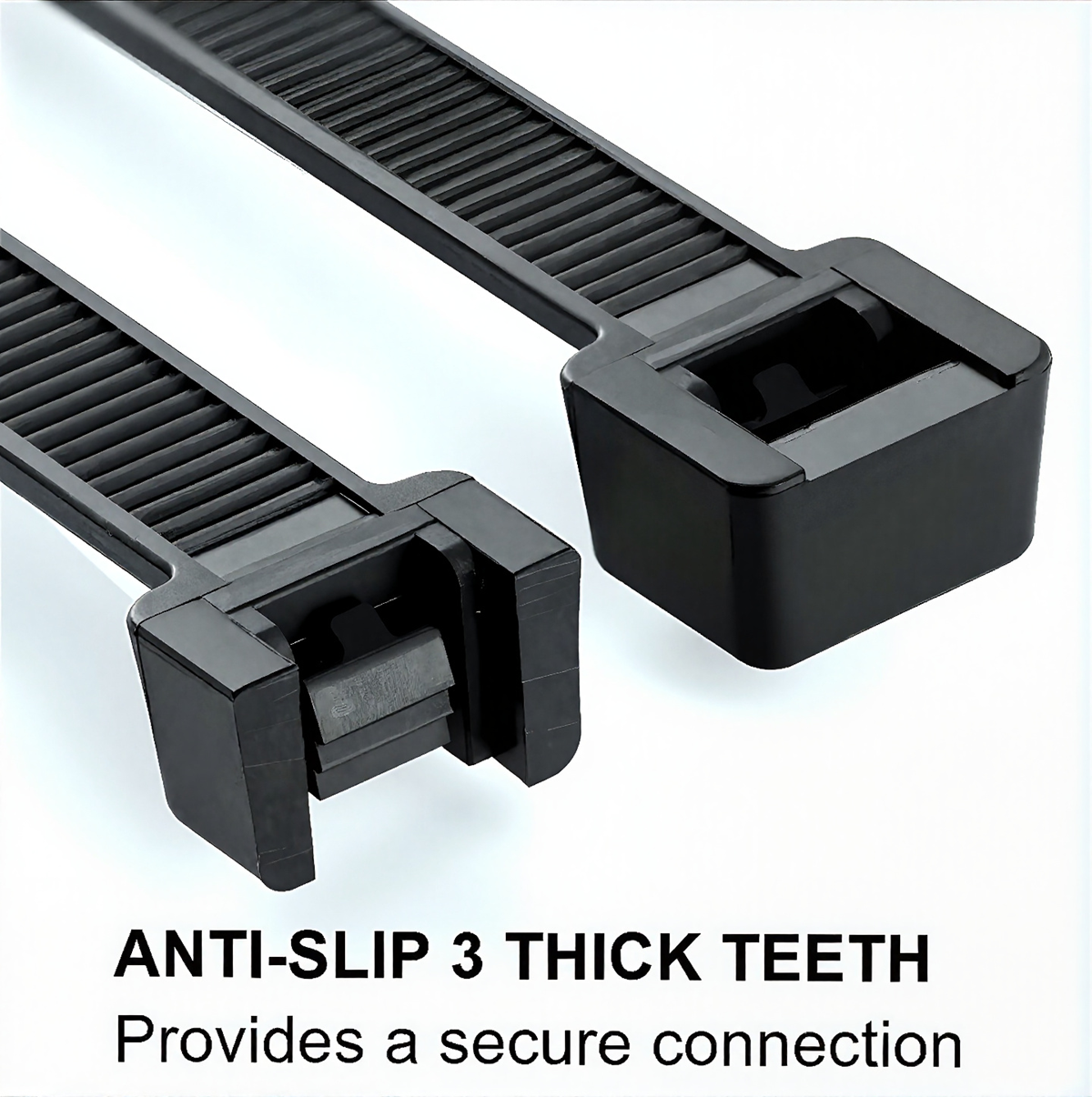
Nylon zip ties are a polymer product: lightweight, flexible, and inexpensive, but ultimately limited by how much heat and chemical exposure plastic can tolerate before softening or degrading. Stainless steel zip ties replace that polymer with a thin, flexible strip of actual steel, using a mechanical ball-lock or crimped buckle instead of plastic ratchet teeth. The result is a fastener immune to UV, resistant to extreme temperatures, and strong enough for demanding industrial and marine applications — at a noticeably higher price point.
What Are Nylon Zip Ties?
Nylon zip ties are the standard cable tie most people are familiar with, made from nylon 6/6 or nylon 66 and available in an enormous range of sizes, colors, and strength ratings. For most cable management, household, and light outdoor tasks, nylon delivers excellent value and performance. See our UV-resistant zip ties guide for how nylon handles sun exposure specifically.
Key Features of Nylon Zip Ties
- Lightweight and flexible for easy handling
- Wide range of tensile strengths from 18 to 250 lbs
- Available in multiple colors, including UV-stabilized black
- Lower cost, ideal for bulk purchasing
What Are Stainless Steel Zip Ties?
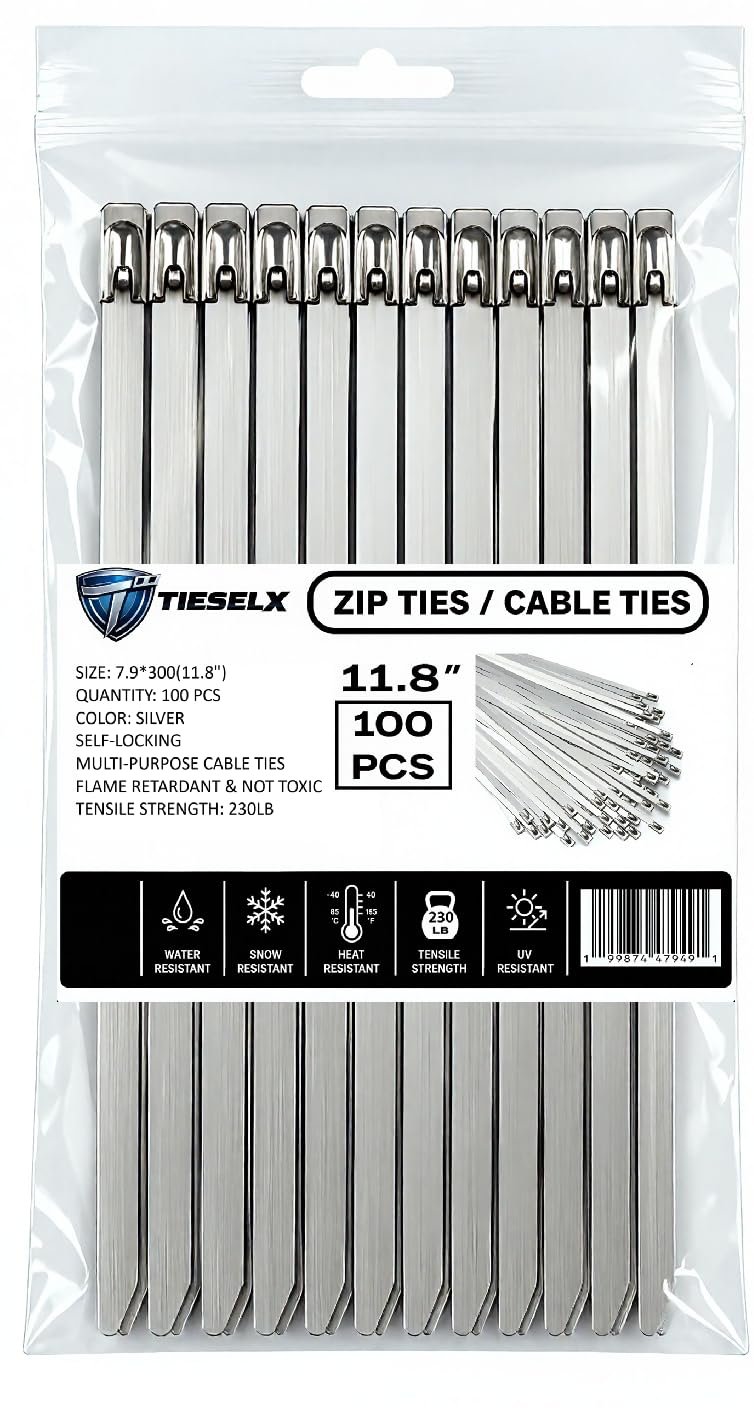
Stainless steel zip ties are metal cable ties designed for environments that would destroy nylon within a short time: extreme heat near engines and exhaust systems, saltwater and marine exposure, and harsh chemical environments in industrial facilities. Rather than plastic ratchet teeth, most use a mechanical ball-lock system that grips the steel strap tight once threaded through, offering exceptional holding strength. For full sizing and grade guidance, see our stainless steel zip ties guide.
Key Features of Stainless Steel Zip Ties
- Completely immune to UV degradation
- Heat resistance often exceeding 500°F depending on grade
- Excellent resistance to saltwater, chemicals, and corrosion
- Very high tensile strength, commonly 100–250+ lbs
304 vs 316 Stainless Steel: What’s the Difference?
Stainless steel zip ties are typically available in 304 or 316 grade. 304 stainless offers strong general corrosion resistance and works well for most industrial, automotive, and outdoor applications. 316 stainless includes added molybdenum, giving it superior resistance to chloride and saltwater corrosion, making it the preferred choice for marine environments, coastal installations, and chemical processing facilities where 304 may eventually show pitting or rust.
Cost and Lifecycle: Looking Beyond the Sticker Price
A pack of stainless steel zip ties can cost several times more per unit than an equivalent nylon pack, which understandably gives many buyers pause. But the comparison looks different when you factor in lifecycle cost: a nylon tie that fails after a season near an exhaust manifold or in saltwater spray means not just a replacement tie, but potentially a repeat service call, re-inspection, or even damage to whatever it was securing. In genuinely harsh environments, the higher upfront cost of stainless steel is often recovered many times over by avoiding repeat failures and labor.
Side-by-Side Comparison Table
| Attribute | Nylon Zip Ties | Stainless Steel Zip Ties |
|---|---|---|
| Material | Nylon 6/6 or 66 | 304 or 316 stainless steel |
| Tensile strength | 18–250 lbs | 100–250+ lbs |
| Durability | Good to excellent depending on grade | Exceptional; resists mechanical stress and wear |
| UV resistance | Varies; carbon-black versions excellent | Complete immunity to UV |
| Heat resistance | Typically -40°F to 185°F | Often up to 500°F+ depending on grade |
| Chemical resistance | Basic to moderate | Excellent, especially 316 grade |
| Indoor vs outdoor suitability | Both, with UV-rated versions for outdoor | Both; ideal for extreme outdoor/marine |
| Reusability | Releasable versions available | Generally single-use once crimped |
| Cost | Low per unit | Significantly higher per unit |
| Best applications | General cable management, light-to-heavy outdoor use | Marine, high-heat, chemical, and extreme outdoor environments |
| Recommended users | Homeowners, offices, general contractors | Marine techs, industrial facilities, automotive/exhaust work |
Advantages and Disadvantages
| Advantages | Disadvantages | |
|---|---|---|
| Nylon Zip Ties | Low cost, lightweight, widely available, some reusable options | Limited heat/chemical tolerance; standard versions degrade in UV |
| Stainless Steel Zip Ties | Immune to UV, excellent heat/chemical resistance, very high strength | Higher cost, heavier, generally not reusable, sharper cut edges |
Real-World Applications and Industries
Nylon zip ties cover the vast majority of everyday needs: home and office cable management, general automotive wiring, gardens, and standard outdoor projects — see our zip ties for cable management guide for sizing help. Stainless steel zip ties take over in marine environments securing wiring and hoses on boats, exhaust and engine-bay applications with extreme heat, chemical processing plants, oil and gas facilities, and outdoor signage or equipment in coastal, high-corrosion areas.
Industries That Rely on Stainless Steel Zip Ties
- Marine and boating — saltwater-exposed wiring and rigging
- Oil, gas, and chemical processing — corrosive environments
- Automotive and aerospace — exhaust and high-heat zones
- Food and beverage processing — washdown and hygiene-sensitive areas
- Utilities and outdoor infrastructure — long-term exposed installations
How to Choose the Right Option
Start with the environment: if your project involves saltwater, sustained high heat, or harsh chemicals, stainless steel is the safer long-term investment despite its higher upfront cost. For general indoor, office, home, or light outdoor use, nylon — including heavy-duty nylon options — delivers excellent performance at a fraction of the price. When in doubt for moderate outdoor exposure without extreme heat or salt, UV-resistant nylon is usually sufficient; reserve stainless steel for genuinely demanding conditions.
Common Mistakes to Avoid
- Using nylon in high-heat exhaust or engine areas — it will soften and fail well before stainless steel would show any wear.
- Choosing 304 stainless for marine use when 316 grade’s added corrosion resistance is worth the small price difference.
- Overpaying for stainless steel in mild environments where UV-resistant nylon would perform just as well for less money.
- Ignoring sharp cut edges on stainless ties, which require more careful trimming and handling than nylon.
Installation Tips
Stainless steel ties typically use a specialized crimping tool for a secure, professional finish, though many smaller sizes can be tightened by hand or with pliers. Always wear gloves when handling and trimming stainless ties, since cut ends can be sharp. For nylon ties, standard hand-tightening is sufficient — trim flush and consider mounting zip ties for wall or panel attachment on either material.
Maintenance and Storage Recommendations
Stainless steel ties require minimal maintenance thanks to their corrosion resistance, though periodic visual inspection in marine or chemical environments is still good practice. Nylon ties should be stored away from direct sunlight and extreme heat to preserve flexibility, and outdoor nylon installations should be checked annually for early signs of UV wear.
Safety Considerations
Trim stainless steel tie ends carefully and consider protective caps or covers in areas where people may brush against exposed metal edges. As with nylon, stainless steel zip ties are a fastening and bundling solution, not a substitute for certified structural or safety-rated hardware.
Why Choose TIESELX?
TIESELX offers both premium nylon 66 zip ties and 304 stainless steel options, so you can match material to environment without switching suppliers. Our stainless steel ties are built with a reliable ball-lock mechanism and tested for tensile strength, while our nylon lines span standard, heavy-duty, and UV-resistant formulations for every everyday application.
Recommended TIESELX Products
- TIESELX Stainless Steel Zip Ties (100 Pack) — 304 stainless, 230 lb tensile strength, ideal for industrial and marine use
- Browse all Stainless Steel Zip Ties — full range of metal cable ties
- TIESELX 8 Inch Heavy-Duty Black Zip Ties — UV-resistant nylon for general outdoor use
- Black Zip Ties — everyday UV-stabilized nylon options
Buying Guide
Match material to environment first, then confirm the correct stainless grade (304 vs 316) for chemical or saltwater exposure. For mixed-use households or businesses, keeping both nylon and stainless steel options on hand covers the full range of projects without overspending on stainless for tasks nylon handles perfectly well.
Common Customer Mistakes
The most common mistake is defaulting to nylon for high-heat or marine applications simply because it’s cheaper, leading to premature failure and repeat purchases. The opposite mistake — buying stainless steel for simple indoor cable management — is also common and simply wastes money on strength and corrosion resistance the project doesn’t need.
Why Buy from ZipTiesEssentials.com
ZipTiesEssentials.com carries genuine TIESELX nylon and stainless steel zip ties with clear material, grade, and tensile strength information on every listing, backed by secure checkout and our expanding library of buying guides to help you choose the right material every time.
Frequently Asked Questions
Are stainless steel zip ties stronger than nylon?
Generally yes — stainless steel ties often exceed 200 lbs of tensile strength, surpassing most nylon options, though heavy-duty nylon can come close for many applications.
Can stainless steel zip ties be reused?
Most stainless steel ties use a one-way crimping or ball-lock mechanism and are not designed for reuse, unlike some releasable nylon ties.
Do stainless steel zip ties rust?
High-quality 304 and especially 316 stainless steel resist rust extremely well, though 316 grade offers superior protection specifically against saltwater corrosion.
Are stainless steel zip ties safe to use outdoors?
Yes, they’re actually superior to nylon for outdoor use since they’re completely immune to UV degradation, unlike standard nylon ties.
Why are stainless steel zip ties more expensive than nylon?
The raw material cost of stainless steel is significantly higher than nylon, and the manufacturing process for the ball-lock mechanism adds further cost compared to simple plastic ratchet teeth.
What’s the difference between 304 and 316 stainless steel zip ties?
316 stainless contains added molybdenum for superior resistance to saltwater and chloride corrosion, making it the better choice for marine environments, while 304 is sufficient for most general industrial and outdoor use.
Can nylon zip ties handle high heat like stainless steel?
No, standard nylon ties typically max out around 185°F, while stainless steel can often handle 500°F or more depending on the specific alloy and application.
Are stainless steel zip ties sharp?
Cut ends can be sharp, so gloves are recommended during installation and trimming, unlike nylon which is generally safe to handle bare-handed.
What tool do I need to install stainless steel zip ties?
Smaller sizes can often be tightened by hand or with pliers, but a dedicated banding or crimping tool provides the most secure, professional installation for larger stainless steel ties.
Is UV-resistant nylon a good alternative to stainless steel?
For general outdoor use without extreme heat or saltwater exposure, yes — UV-resistant nylon performs very well at a much lower cost than stainless steel.
Do stainless steel zip ties work well in food processing environments?
Yes, stainless steel’s corrosion resistance and ability to withstand washdown and sanitizing chemicals make it well-suited to food and beverage processing applications.
Can I mix stainless steel and nylon ties in the same project?
Absolutely — many projects use stainless steel only at the specific high-heat or corrosive points, with standard or heavy-duty nylon handling the rest of the bundling for a more cost-effective overall solution.
Does the higher cost of stainless steel zip ties pay off long term?
In genuinely harsh environments like marine, high-heat, or chemical settings, yes — the extended lifespan and avoided failures typically outweigh the higher upfront unit cost compared to repeatedly replacing failed nylon ties.
Final Summary and Conclusion
Nylon zip ties remain the practical, affordable choice for the overwhelming majority of cable management and bundling tasks, while stainless steel zip ties earn their premium price in environments where heat, corrosion, or raw strength push nylon past its limits. Matching the material to your actual environment — rather than defaulting to either extreme — is the key to a lasting, cost-effective installation. For more on maximizing nylon’s outdoor performance, see our UV-resistant zip ties guide and heavy-duty zip ties guide.