
Stainless Steel Zip Ties: The Complete Guide for Extreme Environments
Some environments simply destroy standard nylon zip ties. Exhaust wrap that runs at engine-bay temperatures, marine equipment exposed to saltwater spray, industrial plants with corrosive chemical fumes, and solar farms baking in direct sun for a decade all demand something tougher than plastic. That’s where stainless steel zip ties earn their place in a professional’s toolkit.
This guide covers what stainless steel cable ties are made of, where they outperform nylon, how to size and install them correctly, and how to decide whether they’re the right choice for your next project.
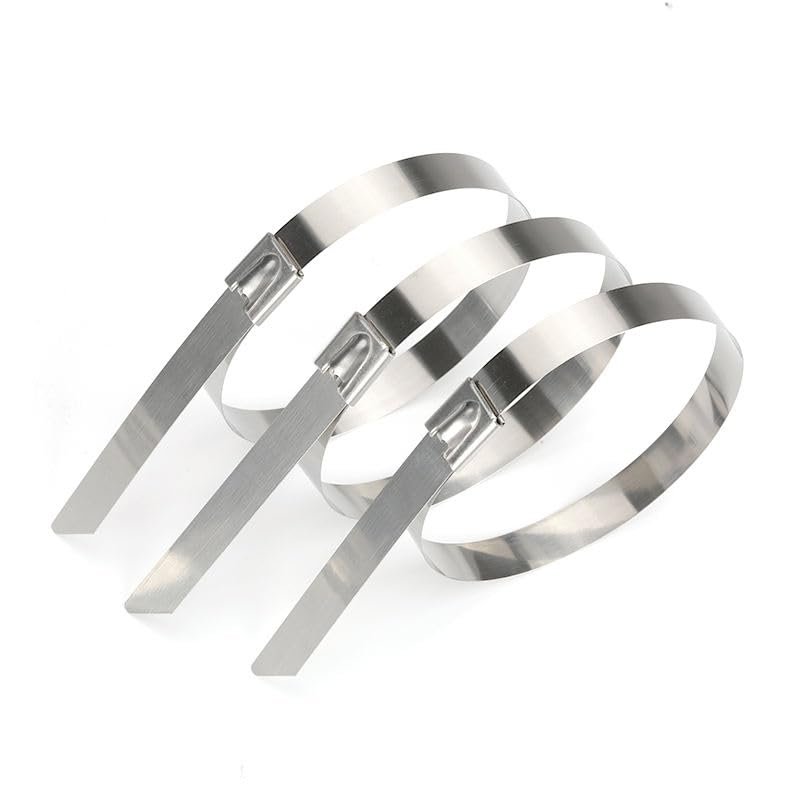
What Are Stainless Steel Zip Ties?
Stainless steel zip ties (also called metal cable ties or stainless steel cable ties) are self-locking fasteners made from 304 or 316 grade stainless steel instead of nylon. A small steel buckle at the head grips the strap through a ratcheting or ball-lock mechanism, holding cables, pipes, or components firmly in place even under intense heat, vibration, or long-term outdoor exposure.
Unlike nylon ties, stainless steel ties won’t soften, melt, or become brittle from UV exposure. They’re designed for environments where a plastic tie would fail within weeks or months.
Key Features to Look For
- 304 or 316 stainless steel construction: 304 grade resists rust and corrosion well; 316 grade offers even higher resistance for marine or chemical environments.
- High tensile strength: Many stainless steel ties are rated well above 200 lb, far exceeding most nylon options.
- Extreme temperature tolerance: Suitable for exhaust wrap, engine bays, and industrial ovens where nylon would melt.
- Corrosion and chemical resistance: Ideal for marine, agricultural, and industrial chemical exposure.
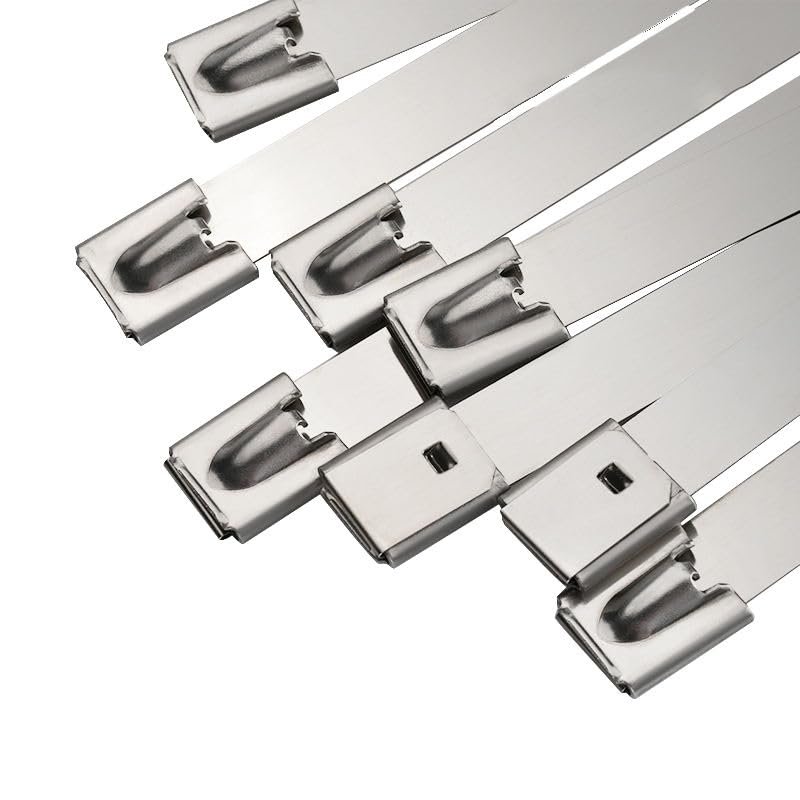
- Self-locking buckle: A built-in metal locking mechanism keeps the strap tight without slipping.
- Smooth, rolled edges: Quality ties are manufactured to minimize sharp edges that could cut hands or damage cable jackets.
Main Benefits
- Unmatched durability in heat, sunlight, and moisture compared to nylon.
- Long service life even in continuous outdoor or industrial exposure.
- Higher tensile strength for demanding structural and mechanical applications.
- Chemical and rust resistance where nylon would degrade quickly.
- Reliable performance across an extremely wide temperature range.
Common Applications
Stainless steel zip ties are the go-to choice for professionals working in tough environments, including:
- Automotive and motorsport exhaust wrap and heat shield installation
- Marine rigging, boat wiring, and dock equipment
- Solar panel and renewable energy installations exposed to constant sun
- Agricultural and farm equipment, fencing, and irrigation
- Industrial plants with chemical exposure or extreme heat
- Outdoor infrastructure such as signage, utility boxes, and cable runs
- Construction sites requiring long-term structural fastening
Who Should Use Stainless Steel Zip Ties?
If you’re organizing desk cables or a home office setup, standard nylon ties or our zip ties for cable management buying guide will serve you better and cost less. Stainless steel ties are built for automotive technicians, marine professionals, solar installers, farmers, and industrial maintenance teams working in heat, moisture, or chemical exposure where nylon simply won’t last.
How to Install Stainless Steel Zip Ties: Step-by-Step
- Select the correct length and grade (304 for general corrosion resistance, 316 for marine or chemical environments).
- Wrap the tie around the cable, pipe, or component, feeding the tail through the buckle.
- Pull the tail through by hand to remove slack, keeping the strap flat against the surface.
- Tighten with pliers for a firm, vibration-resistant hold, taking care not to over-tighten on soft or insulated materials.
- Trim the excess tail with metal-rated cutters, since standard nylon-tie snips may not cut steel cleanly.
- Check for sharp edges at the cut point and file down if necessary before the area is handled.
How to Choose the Right Stainless Steel Zip Tie
Selection depends on the environment, the diameter of what you’re securing, and the load it needs to withstand.
| Grade | Best For | Corrosion Resistance |
|---|---|---|
| 304 Stainless | General industrial and outdoor use | Very good |
| 316 Stainless | Marine, coastal, and chemical environments | Excellent |
For most general-purpose heavy-duty needs, a 100-pack of 11.8 inch, 230 lb-rated 304 stainless steel ties covers the majority of automotive, marine, and industrial jobs. Browse the full stainless steel zip ties collection for current sizes and pack options.
Common Mistakes to Avoid
- Choosing 304 grade for marine or heavy chemical exposure where 316 grade would last significantly longer.
- Using standard cutters that aren’t rated for steel, leading to jagged, unsafe edges.
- Over-tightening around soft or insulated cables, which can cause pinching or damage.
- Ignoring edge burrs after trimming, which can cause cuts during future handling.
- Using stainless ties where a lighter nylon tie would suffice, adding unnecessary cost.
Maintenance and Care Tips
Stainless steel zip ties require very little maintenance, which is part of their appeal. Periodically inspect installations in marine or chemical environments for any surface pitting, and rinse off salt or chemical residue where possible to further extend service life. In high-vibration settings, check periodically to confirm the buckle hasn’t loosened over time.
Safety Tips
- Wear cut-resistant gloves when tightening or trimming steel ties.
- Use metal-rated cutting tools rather than standard nylon zip tie snips.
- File or smooth any sharp trimmed edges before the installation is handled again.
- Confirm the tensile rating exceeds your application’s load with an appropriate safety margin.
Stainless Steel vs. Alternative Fastening Solutions
| Solution | Strength | Heat Resistance | Best Use Case |
|---|---|---|---|
| Stainless steel zip ties | Up to 230+ lb | Excellent | Extreme heat, marine, chemical exposure |
| Heavy-duty nylon zip ties | 50-175 lb | Good | General industrial and outdoor bundling |
| Reusable zip ties | Up to 75 lb | Moderate | Adjustable, temporary bundling |
| Mounting zip ties | Up to 50 lb | Moderate | Surface-mounted cable runs |
For most cable management jobs, our heavy-duty nylon zip ties are more than adequate and cost less. Save stainless steel for the environments where nylon genuinely can’t keep up: heat, saltwater, and chemical exposure.
Why Choose TIESELX?
TIESELX stainless steel zip ties are built from genuine 304 stainless steel and tested for consistent tensile performance, so you can rely on the rated strength printed on the pack. Smooth, rolled edges reduce the risk of cuts during installation, and the self-locking buckle design holds firm even under constant vibration, making them a trusted choice for automotive, marine, and industrial professionals.
Why Buy from ZipTiesEssentials?
ZipTiesEssentials focuses exclusively on zip ties and cable management, so our stainless steel range is selected for genuine industrial performance rather than generic hardware-store quality. We provide clear grade and tensile-strength labeling, fast shipping, and a team that can help you choose between 304 and 316 grade for your specific environment. Explore our full stainless steel zip ties collection to find the right pack for your project.
Recommended Related Products
- Stainless Steel Zip Ties 100 Pack, 11.8 inch, 230 LB tensile strength
- Heavy-Duty Nylon Zip Ties for general industrial use
- Mounting Zip Ties with Screw Holes for surface-mounted runs
- Reusable Zip Ties for adjustable, temporary bundling
Customer Use Case
An automotive fabricator specializing in performance exhaust builds was experiencing frequent failures with nylon ties securing header wrap near the exhaust manifold. Switching to 304 stainless steel ties eliminated the problem entirely, with the ties holding firm through repeated heat cycles well beyond what any nylon tie could withstand.
Expert Tip
When trimming stainless steel ties, cut at a slight angle and file the tip smooth rather than leaving a flat, sharp edge. This small step significantly reduces the risk of cuts during future maintenance or inspection.
Frequently Asked Questions
What grade of stainless steel is used in cable ties?
Most stainless steel zip ties are made from 304 grade stainless steel, with 316 grade available for marine and high-chemical-exposure environments.
Are stainless steel zip ties waterproof?
Yes, stainless steel ties are highly water and moisture resistant, making them a strong choice for marine and outdoor wet environments, especially in 316 grade.
Can stainless steel zip ties handle high heat?
Yes, they’re commonly used for exhaust wrap and engine-bay applications where temperatures would melt or degrade standard nylon ties.
How strong are stainless steel zip ties compared to nylon?
Stainless steel ties often exceed 200 lb of tensile strength, significantly higher than most nylon options, which typically top out around 175 lb even in heavy-duty versions.
Do stainless steel zip ties rust?
304 grade offers strong rust resistance for most environments, while 316 grade provides superior resistance for marine and coastal use where saltwater exposure is constant.
What tools do I need to cut stainless steel zip ties?
Standard nylon zip tie snips are not designed for steel. Use metal-rated cutters or pliers with a cutting edge built for wire or steel strapping.
Are stainless steel zip ties reusable?
No, most stainless steel zip ties use a one-way locking buckle and are designed for single, permanent use, similar to heavy-duty nylon ties.
Can stainless steel zip ties be used outdoors long-term?
Yes, they are among the most durable options for long-term outdoor use, resisting UV degradation, temperature swings, and moisture far better than nylon.
Is 316 stainless steel necessary for every application?
No. 304 grade is sufficient for most general industrial and outdoor uses. 316 grade is recommended specifically for marine, coastal, or heavy chemical exposure environments.
What size stainless steel zip tie should I use?
Measure the diameter of what you’re securing and choose a length with a few extra inches for the buckle and tail; an 11.8 inch tie covers most general bundling and mounting needs.
Can stainless steel ties be used on electrical wiring?
Yes, but ensure the strap does not have sharp edges in contact with wire insulation, and confirm the application doesn’t require electrical insulation properties, which steel does not provide.
Why choose stainless steel over heavy-duty nylon zip ties?
Choose stainless steel when your application involves extreme heat, saltwater, chemical exposure, or long-term outdoor durability beyond what UV-resistant nylon can offer.
Do stainless steel zip ties conduct electricity?
Yes, unlike nylon, stainless steel is conductive. Avoid using metal ties in applications where accidental contact with live conductors could create a short circuit or safety hazard.
How do stainless steel zip ties compare in price to nylon?
Stainless steel ties typically cost more per piece than standard nylon ties, reflecting their higher tensile strength, heat resistance, and corrosion resistance. For applications where nylon performs adequately, it remains the more budget-friendly choice.
Final Thoughts
Stainless steel zip ties exist for the jobs where nylon simply isn’t tough enough: exhaust wrap, marine rigging, solar installations, and industrial environments with heat or chemical exposure. Choosing the right grade for your environment ensures a secure, long-lasting hold that won’t need to be revisited for years. Ready to upgrade to a fastener that can handle the harshest conditions? Shop our stainless steel zip ties collection and find the right size for your project.